Shore Trips in Italy, Private Tours in Italy, Naples Port Shore Excursions, Naples Airport Transfer, Amalfi Drive, Pompeii Excursions

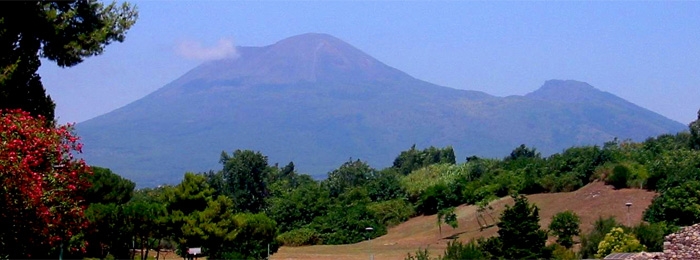
Mount Vesuvius Area - Things to see
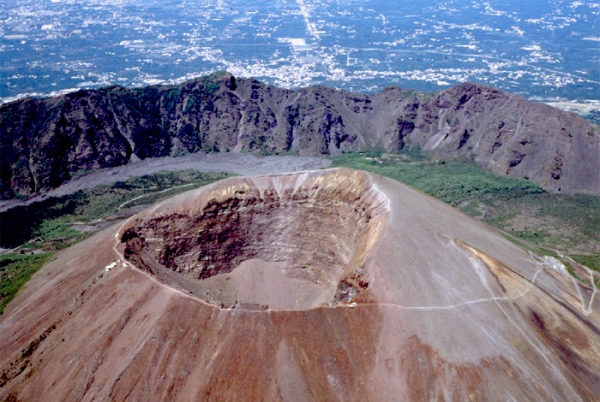
Whoever says Vesuvius, says Campania.
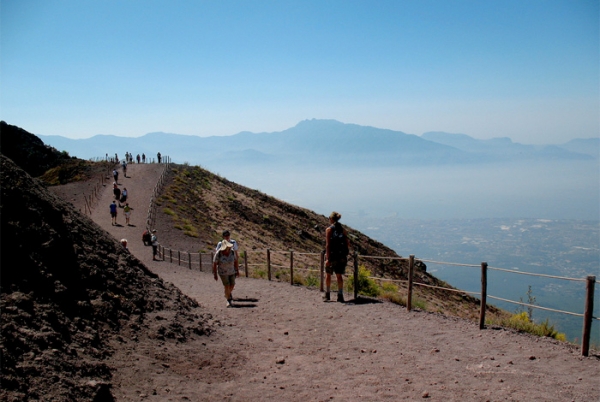
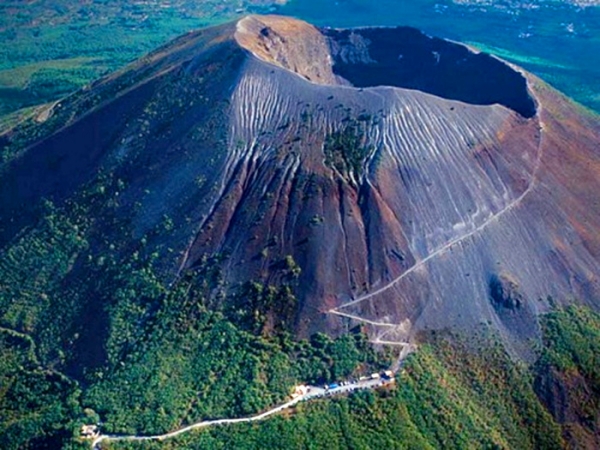
Neapolitans call the most famous mountain in the world ‘A Muntagna. It is the symbol of the City that, with its perfect form, closes the Gulf. The majestic cone dominates a disquieting and evocative environment. Tormented landscapes of savage beauty await the visitor: the panorama from the top of the mountain extends from the Sorrentine Peninsula to Capo Posillipo, giving rise to unforgettable memories, especially in the tenuous light of sunrise or with the intense ones of sunset.
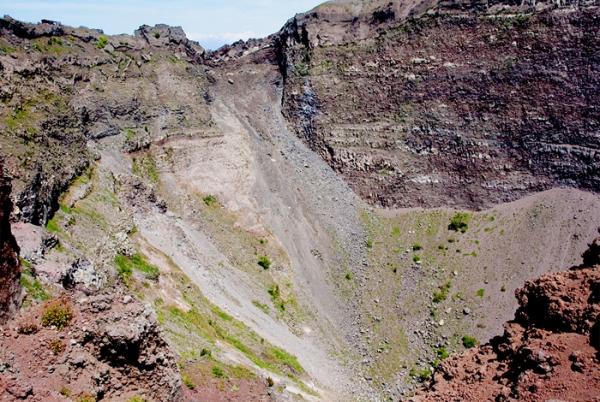
Vesuvius is the only active volcano in continental Europe, and is also one of its most dangerous, as the land at its feet is densly populated and the houses arrive up to 700 mt above sea level. The summit to the left is that of Mount Somma (1133 mt), and to the right the cone of Vesuvius (1281 mt). They are seperated by a valley called ‘Valle del Gigante’ (Valley of the Giant), in turn subdivided into ‘Atrio del Cavallo’ (Hall of the Horse, West) and ‘Valle del Inferno’ (Valley of Hell, East).
The original inhabitants had forgotten that they were dealing with a volcano: it was known solely for its excellent wines and for the thick vegetation that covered its summit. It became suddenly famous when, in 79 BC, it erupted. Entire cities, among which Pompeii and Herculaneum, were destroyed.
The last eruption, filmed by Allied troops, was in 1944. Since then the volcano has been dormant. In 1991 the institution of Vesuvius National Park was decreed, and the “World Biosphere Reserve” status was given to it by Unesco. This comprises all of the area around the volcano, the entire archaeological system of Pompeii, Herculaneum, Oplontis and the Miglio d’Oro (Golden Mile) with its splendid examples of 1700’s and 1800’s villas. As for the flora, the territories of the Vesuvius and the Somma differ in certain aspects. The former is more arid and sunny, with typical mediterranean vegetation, pine woods and holm-oak stands. The latter is moister, with woods of chestnut, oak, adler, maple and holm-oak trees. Among these you can come across, rarely, a splendid stand of birches, unusual for this mediterranean environment. There are also many orchids, 23 species in all, and the bright yellow broom, that so enchanted the poet Giacomo Leopardi. The fauna of the Park is also particularly interesting.
Related Tours
Archaeological Tour: Pompeii, Herculaneum, Vesuvius and Naples
Code: EXC1-N
Departure From: Rome, Naples, Sorrento, Amalfi, Salerno hotels, ports, airports and stations
Duration: 9-10 hours

Pompeii, Herculaneum & Vesuvius Private Tour - Special Offer
Code: PSE1-N
Departure From: Naples, Salerno, Sorrento and Amalfi Ports
Duration: 9-10 hours
Offer available until August 31, 2014.
Enogastronomic Wine Tour
Code: PSE4-N
Departure From: Naples, Salerno, Sorrento and Amalfi Ports
Duration: 9-10 hours
Localities
Pompeii - Things to see
Being an important commercial centre in Campania felix, played a strategic ... Continue
Herculaneum - Things to see
At Herculaneum, unlike Pompeii, where the eruption destroyed roofs and atti... Continue
Naples - Things to see
In the shadow the Vesuvius tourism’s roots run deep: on the imprints ... Continue
The Appian Way, Rome - Things to see
A walk along the original slab stones of the ancient Appian Way is an ideal... Continue
The Catacombs, Rome - Things to see
A visit to the Catacombs on the Appian Way allows us to trace the origins o... Continue
Cerveteri - Things to see
Cerveteri or Kaisra to the Etruscans dates back to the 11th century as prov... Continue
Tarquinia - Things to see
These necropolises extend for 750 metres and contain about two hundred buri... Continue
Castel Gandolfo - Things to see
Latin: Castrum Gandulphi, colloquially Castello in the Castelli Romani dial... Continue
Florence - Things to see
It is the birthplace of the Renaissance. The home of the Medici family, Mic... Continue
Pisa - Things to see
A quiet city, Pisa is a renowned cultural destination of architectural inte... Continue
David Vernon - 04/06/2007
Hello Josephine
just a short note to thank you and your company for giving us such a wonderful experience.
all three ...
Continue »

rome.italylimousine.com - naples.italylimousine.com - pompeii.italylimousine.com - sorrento.italylimousine.com - positano.italylimousine.com - amalficoast.italylimousine.com
Phone: +39 081 808 04 57 - Fax: +39 081 808 04 57 [24hrs online]
Office cells +39 338 968 1866 [24hrs line] +39 392 9900 198 Service Coordinators - E-mail: reservations@italylimousine.com
