Shore Trips in Italy, Private Tours in Italy, Naples Port Shore Excursions, Naples Airport Transfer, Amalfi Drive, Pompeii Excursions

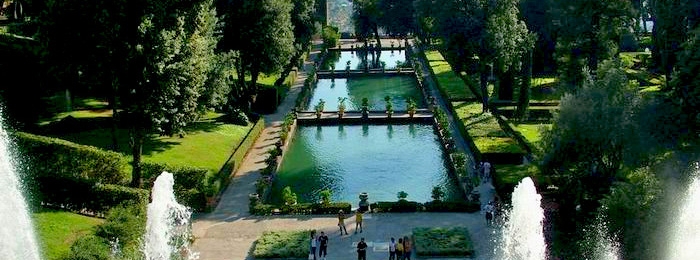
Tivoli and Villa d'Este - Things to see
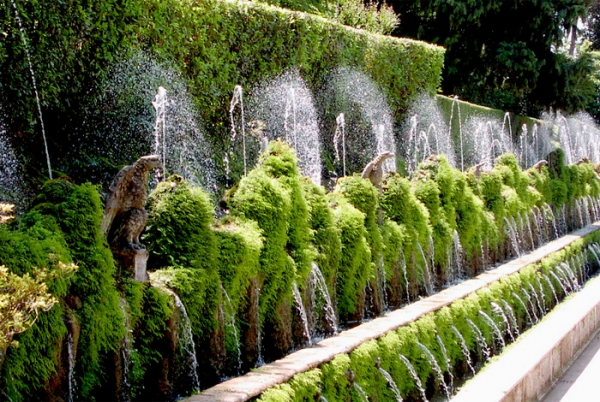
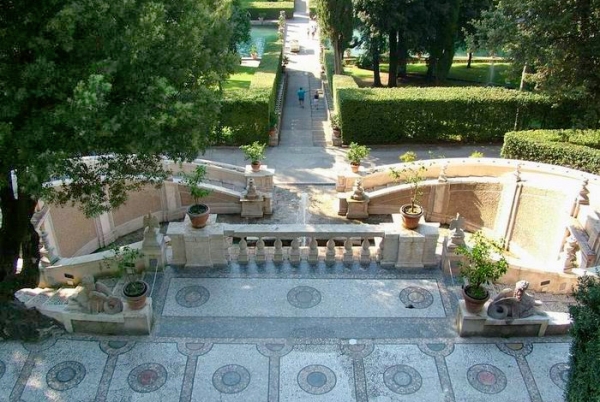
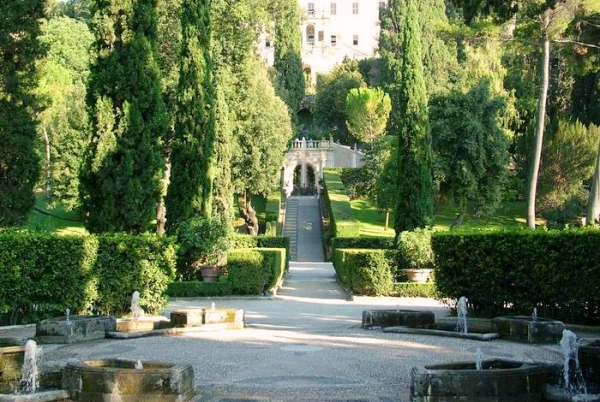
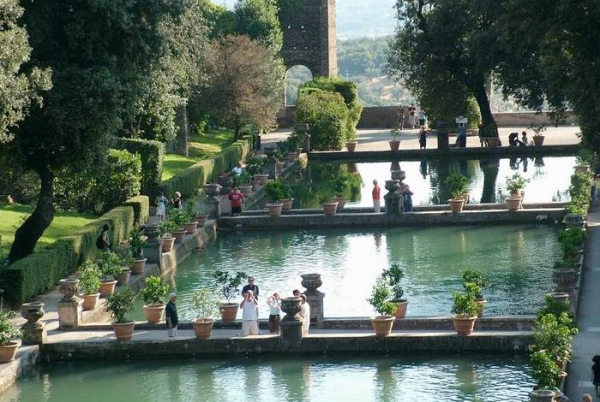
The Villa was designed by Pirro Ligorio and built in 1550 by Cardinal Ippolito II d’Este. It made radical changes to both the natural landscape and to current building practices of the Middle Ages.
The normal urban layout was changed in two ways. First by the building of the villa and its gardens that replaced the normal Mediaeval system. Secondly by the construction of a new road, Via dell’Inversata, along which new residences were built.
The landscape was also radically changed with differing ground levels being established by the gardens. Originally these gardens did not have the robust trees we see today. The gardens featured wonderful water jets and numerous fountains on the villa grounds. They were built in 1550 by Cardinal Ippolito II d’Este, the son of Lucrezia Borgia and Alfonso I d’Este, along plans designed by Pirro Ligorio, on the site of a Mediaeval quarter known as the Valle Gaudente. The splendid fountains were fed with water from the River Aniene by aqueducts running under the historic centre. The courtyard situated at the entrance had been a Benedictine cloister that was taken over by the villa.
The Italian garden highlighted the architectural techniques and art of gardening of the Renaissance period. The best-known fountains are: The Cento Fontane, the Bicchierone, and the dell’Organo, (where the water supply system for the Ovato and Draghi fountains were situated).
The Villa
The present day entrance is in Piazza Tranto and is made up of a 15th century gateway that opens on to a wide vaulted passageway decorated with frescoes that in turn leads to the ancient Benedictine cloister. Alongside the Chiesa di Santa Maria Maggiore sits a fountain with a statue of Venus, a sarcophagus pool and a 4th century marble bust positioned on high. The final touches are two 14th century marble busts. The upper level rooms are accessed via the cloister.
The Gardens
Diana’s grotto is the Renaissance centrepiece of the gardens and is adorned with stuccoes, mosaics and images representing Neptune, Minerva and the Muses. Further into the gardens lies the Fontana del Bicchierone, that was designed in the form of a large shell by Gian Lorenzo Bernini. Going downwards to the left lies the Rometta that is a small-scale reproduction of the main buildings of ancient Rome. Continuing along we come to the Rometta Fountain decorated with eagles, ships, obelisks, fluer de lis and embossings depicting themes from Ovid’s “Metamorphoses”.
The Cento Fontane pathway leads to the Fontana dell’Ovato that symbolically represents Tivoli as opposed to Rome with its Rometta Fountain. Sitting above the waterfall are rocks that make up the pedestal for a statue of Pegasus. The semi-circular pond houses eight nymphs spouting water.
The Villa’s main attraction was and still is the spectacular Fontana dell’Organo. This superb fountain conceals a water-operated organ by the French designer, Claudio Venard. There is a wonderful Baroque shrine overlooking the fountain basin.
The Fontana dei Draghi is situated between double flights of steps. It took its name from the group of four dragons that spurt out high jets of water from their huge jaws. This fountain was built in honour of Gregory XIII, one of Ippolito d'Este’s guests, in 1572.
Another truly amazing sight must have been the Fontana della Civetta. Although no longer present, this fountain housed a complex mechanism that created a scene of birds moving and singing until an owl appeared and scared them into silence. Remains of this work by Giovanni del Luco and Raffaele da Sangallo, are seen in the colonnades decorated with sprays of flowers, depictions of the Este eagles, the fleur de lis and the embossings.
The Fontana di Proserpina is to the left of the Fontana della Civetta. The sculptures in the nymphaeum depict “il ratto di Proserpina”. Two niches to the side are flanked by columns depicting grape vines.
Following part of the city walls leads to the Peschiere, one of two huge square basins designed for fish breeding. The view from here of the Neptune Fountain is spectacular. It was built by Attilio Rossi with the aim of giving a sense of visual continuity to the fishponds and the towering Fontana dell'Organo. It achieves this thanks to the magnificent jets of water it shoots high into the air.
A spectacular view of the whole villa, the fountains and surrounding landscape can be enjoyed from the Rotonda dei Cipressi, also by Gabriele D'Annunzio.
Using the newly designed entrance to the villa in Piazza Campitelli, it will be possible to enter the mediaeval section of the town.
Villa Adriana
Hadrian’s Villa lies in the valley below Tivoli and is spectacular for the sheer majesty of its architecture.
It was commissioned by the Emperor Hadrian who personally supervised its construction. The villa was built in various stages, the first of which dealt with the remodelling of a previous villa belonging to the republic.
Villa Adriana is an ensemble of impressive constructions, roads, spas, lakes, libraries, theatres and temples that some historians consider to be projections of places visited by the Emperor during his travels.
The design was certainly inspired by Nero’s Domus Aurea, the wonderful Roman royal palace that was destroyed after the Emperor’s death. It was built between 64 and 69 AD on plans by the architects Severo and Celere.
Hadrian wanted to reproduce the buildings and places that had struck his imagination during his many travels through the provinces. The Lyceum, the Academy, the Pritaneo and the painted Poicile in Athens; the ancient Egyptian city of Canopus on the Nile delta; the Valley of the Temples in Thessaly.
Well versed in Grecian culture, Hadrian had no problem blending Greek sophistication with his practical approach to ruling that had been entrusted him by Rome.
The Imperial Palace
The magnificent ruins of the Imperial Palace are made up of three main units with enormous colonnaded or peristyle courtyards. The collection of buildings covers an area of approximately 50,000 square metres (almost 60,000 square yards). The site lies to the West of the tour we will suggest. The digs carried out to date have unearthed only one part of the site. Future revelations may well change what in some cases is still conjecture.
We feel it best to begin a tour of the site near the Canopus then heading right towards the Prætorium, a grandiose multi-floor service building with high arches along the façade. From here we go back skirting the fishpond to reach the most magnificent of the three palace peristyles.
La Piazza d'Oro – (The golden piazza) This huge open almost square space was not called the “golden piazza” by chance: The area was not only decorated with the most exotic of materials but showed some very original architectural designs and solutions that are highly appreciated by scholars. Access is through an octagonal vestibule capped with a dome featuring spherical segments and supported by eight columns. Some of the most beautiful floor mosaics in the entire villa are to be found in one of the nearby buildings. The peristyle is bordered by a double gallery with 60 granite and cipolin columns.
Il peristilio di Palazzo – (the Palace Peristyle) Heading Northwards, we come to the central unit of the palace with its majestic rooms from which Hadrian exercised all his Imperial power. The peristyle is surrounded the palace and is the second largest of the three colonnaded courtyards that are an essential part of this vast Imperial complex.
Sala dei pilastri dorici – (The chamber with Doric Pillars) This chamber is located between the peristyle and the Piazza d’Oro, and in all probability was used for legal matters. Because of its sharp angular construction, this area stands out amid the soft curved lines that were so much a feature of the Villa. The restoration work carried out clearly demonstrates this particular feature.
Il ninfeo di Palazzo – (the Palace Nymphaeum) The nymphaeum was one of the rooms that ringed the palace. It was enclosed at one end by a high semi-circular wall in the form of an exedra or outdoor seating area and the walls were interlaced patterns made of brick. There were tow pools in the centre of a small piazza that was paved in opus spicatum.
Il terzo perstilio – (the Third Peristyle) At this stage we have arrived back again within sight of the Poicile near which we find the area contained within the library peristyle. This is reached passing through several very interesting rooms next to the short Eastern side of the Poicile.
La sala della biblioteca (o sala dei filosofi) – (the Library Room or Philosophers Room) The first sight that greets you is an enormous room with arched apses as a backdrop. Seven recesses are set flush in the walls. The room is also referred to as the Philosopher’s Room or the Temple of the Stoics and was certainly used as a library.
Il Teatro Marittimo – (the Maritime Theatre) The adjoining Maritime Theatre was one of the most curious rooms in the Villa and perhaps serves to underline the particularly complex personality of Hadrian. It was a small artificial island in a curved vestibule that was further divided into widely varied designs. It was completely surrounded by water. The entire theatre was encircled by a colonnade.
Il Cortile delle Biblioteche – (the Library Courtyard) We now arrive at the third of the three great peristyles of the Imperial palace that is surrounded by a colonnade made up of Corinthian columns. The name comes from the fact that it is surrounded by what are traditionally known as the Latin and Greek libraries.
Gli hospitalia (o Camere per ospiti) – (the Guests rooms) These rooms are located on the Northeast corner of the peristyle and extend along the side of the building. There are ten rooms connected by a wide corridor that leads to a large communal room. Each of the rooms had three rectangular alcoves and a mosaic floor with a black and white weave.
Il padiglione di Tempe (the Tempe Pavilion)
This was a large terrace with a magnificent view that offered guests in the “hospitalia” a breathtaking view over the waters of the Acqua Ferrata below.
Related Tours
Tivoli Gardens - Villa d'Este and Hadrian's Villa Private Tour
Code: PSE2-R
Departure From: Civitavecchia Port
Duration: 9-10 hours


Localities
Pompeii - Things to see
Being an important commercial centre in Campania felix, played a strategic ... Continue
Herculaneum - Things to see
At Herculaneum, unlike Pompeii, where the eruption destroyed roofs and atti... Continue
Mount Vesuvius Area - Things to see
Whoever says Vesuvius, says Campania. Neapolitans call the most famous moun... Continue
Naples - Things to see
In the shadow the Vesuvius tourism’s roots run deep: on the imprints ... Continue
The Appian Way, Rome - Things to see
A walk along the original slab stones of the ancient Appian Way is an ideal... Continue
The Catacombs, Rome - Things to see
A visit to the Catacombs on the Appian Way allows us to trace the origins o... Continue
Cerveteri - Things to see
Cerveteri or Kaisra to the Etruscans dates back to the 11th century as prov... Continue
Tarquinia - Things to see
These necropolises extend for 750 metres and contain about two hundred buri... Continue
Castel Gandolfo - Things to see
Latin: Castrum Gandulphi, colloquially Castello in the Castelli Romani dial... Continue
Florence - Things to see
It is the birthplace of the Renaissance. The home of the Medici family, Mic... Continue
venkatesh - 07/01/2005
Hi Josephine:
I wanted to let you know that your limo services were excellent. In particular, Reno (Genare) is a ...
Continue »

rome.italylimousine.com - naples.italylimousine.com - pompeii.italylimousine.com - sorrento.italylimousine.com - positano.italylimousine.com - amalficoast.italylimousine.com
Phone: +39 081 808 04 57 - Fax: +39 081 808 04 57 [24hrs online]
Office cells +39 338 968 1866 [24hrs line] +39 392 9900 198 Service Coordinators - E-mail: reservations@italylimousine.com
