Shore Trips in Italy, Private Tours in Italy, Naples Port Shore Excursions, Naples Airport Transfer, Amalfi Drive, Pompeii Excursions

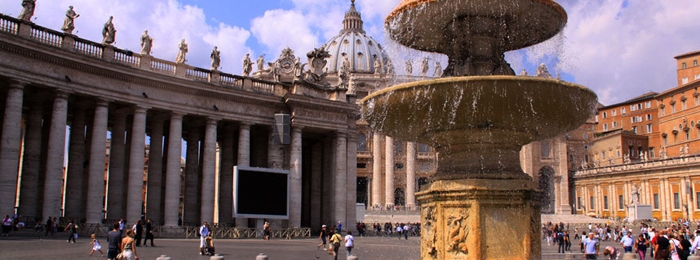
Vatican City - Things to see
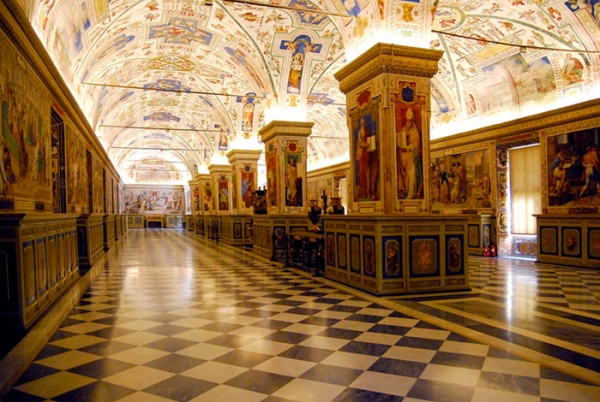
The Vatican City, independent sovereign state since 1929 (Lateran Pacts), rises on the site where St. Peter was martyred and buried. The first Christian Emperor Constantine, built a splendid basilica there in the 4th century AC which was in later times demolished and rebuilt over a period of almost 120 years (1506-1614). The greatest architects of the period, including Bramante, Michelangelo and Maderno, collaborated in the project of the new church, the largest in the world with its surface adding up to a total of 22,000 square metres. The Basilica of St. Peter’s offers one of the most impressive experiences of architectural space available anywhere. Photographs cannot convey the impact on the visitor of the vastness of the structure, of the splendid decorations and works of art it contains. The alternation, during the construction phase, between the Greek cross and Latin cross plan, and the definitive choice of the latter, explains why one must proceed significantly along the central nave before coming in full view of Michelangelo’s extraordinary dome (which measures 136 m in height and 42m in diameter) The artistic treasures contained in St. Peter’s include the celebrated Pietà by the same Michelangelo, the only work he ever signed, and which he made when he was only 24, using a single block of marble; the baldacchino above the main altar, the authentic visual focus of the church, created by Bernini with bronze taken from the Pantheon, and the bronze statue of St. Peter by Arnolfo di Cambio.
The church is also famous for its almost total absence of paintings, substituted with mosaics by the Vatican School.
St. Peter’s Square can contain 300,000 people; it defines the border with Italy and welcomes visitors with the embrace of the colonnade designed by Bernini. It is the site of important ceremonies tied with the pope’s direct relationship with the people, such as audiences and blessings.
The Vatican Museums and their immense wealth of art, resulting from centuries of papal collections and commissions, offer an extraordinary experience in which the relevance of the works on display is heightened by the splendour of the structures in which they are displayed, and that are in themselves worth a visit. We do not proceed through buildings designed specifically to allow the large numbers of contemporary visitors to see artistic objects in a functional manner, but we walk through the galleries and rooms of papal palaces, at one time reserved for a small elite. The Museums offer a great variety of collections, including ancient Greek as well as Roman art (of which the Vatican owns the largest collection in the world), Egyptian and Etruscan art and, of course, the great masterpieces of Renaissance art with the frescoes of the Raphael Rooms and the Sistine Chapel. This is a great opportunity to realize how coming to Rome often has more to do with remembering what we have always somehow known, than with discovering things for the first time. Images that are strongly related to the identity of Western artistic culture are here. The restoration of the Sistine Chapel lasted 20 years and revealed the brilliance of the original colours, allowing us to fully enjoy the details of the biblical episodes on the ceiling and of the Last Judgement by Michelangelo, with its almost 400 figures captured in the most dramatic moment in the history of humanity. The Sistine Chapel also contains the famous 15th century frescoes by Botticelli, Perugino and Ghirlandaio, among others.
Castel Sant’Angelo
Via della Conciliazione leads to Castel Sant’Angelo, the fortress of the popes built in the Middle Ages above the remains of the tomb of the Emperor Hadrian (2nd century AD). Its structure is an example of the continuity between past and present in the urban fabric of Rome, where ancient buildings were often reused and adapted to serve new purposes, thus maintaining an active role in the history of the city. The location of the emperor’s mausoleum on the right bank of the river Tiber, close to the Vatican, determined its use as a defensive rampart, connected to the papal palaces by a passageway, known as the “Passetto”, and endowed with a moat surrounding it, drawbridges and cannons. In the past the castle was famous for its terrible dungeons, described by Benvenuto Cellini who made an adventurous escape from them. It was also a place of public executions, as recalled by the opera Tosca, that sees its tragic ending here. Walking through the 58 rooms the Museum of the Castel Sant’Angelo today is a journey through its 1800 years of history, and the many terraces offer extraordinary views of the city.
Don’t miss the Bridge of the Angels, with the statues by the Bernini school that in the past announced to pilgrims on their way to visit the tomb of St. Peter, that the goal of their journey was near.
Related Tours
Private Tour: Vatican City
Code: EXC2-R
Departure From: Civitavecchia Port, Rome Hotels/Airport/Station
Duration: 9-10 hours
Private Tour: Rome City and Vatican City
Code: EXC1-R
Departure From: Civitavecchia Port, Rome Hotels/Airport/Station
Duration: 9-10 hours

Italy Tours Port Promotion for 2015
Book three luxury tours from Naples area and Amalfi Coast you can choose between Naples port, Sorrento port, Amalfi Port and Salerno Port - from Rome area Civitavecchia port - from Tuscany area Livorno port
Offer available until December 31, 2014.

2 Ports Shore Excursions - Rome-Civitavecchia and Naples/Salerno/Sorrento Ports
Two tours from Civitavecchia and Naples (/Salerno/Sorrento) ports to discover Italian Treasures at a competitive price!
Offer available until August 31, 2014.



Localities
Pompeii - Things to see
Being an important commercial centre in Campania felix, played a strategic ... Continue
Herculaneum - Things to see
At Herculaneum, unlike Pompeii, where the eruption destroyed roofs and atti... Continue
Mount Vesuvius Area - Things to see
Whoever says Vesuvius, says Campania. Neapolitans call the most famous moun... Continue
Naples - Things to see
In the shadow the Vesuvius tourism’s roots run deep: on the imprints ... Continue
The Appian Way, Rome - Things to see
A walk along the original slab stones of the ancient Appian Way is an ideal... Continue
The Catacombs, Rome - Things to see
A visit to the Catacombs on the Appian Way allows us to trace the origins o... Continue
Cerveteri - Things to see
Cerveteri or Kaisra to the Etruscans dates back to the 11th century as prov... Continue
Tarquinia - Things to see
These necropolises extend for 750 metres and contain about two hundred buri... Continue
Castel Gandolfo - Things to see
Latin: Castrum Gandulphi, colloquially Castello in the Castelli Romani dial... Continue
Florence - Things to see
It is the birthplace of the Renaissance. The home of the Medici family, Mic... Continue
Crystal - 29/05/2008
Josephine,
Thank you so much for all your help setting up our tour of the Amalfi coast. We all had a wonderful time.
Our ...
Continue »

rome.italylimousine.com - naples.italylimousine.com - pompeii.italylimousine.com - sorrento.italylimousine.com - positano.italylimousine.com - amalficoast.italylimousine.com
Phone: +39 081 808 04 57 - Fax: +39 081 808 04 57 [24hrs online]
Office cells +39 338 968 1866 [24hrs line] +39 392 9900 198 Service Coordinators - E-mail: reservations@italylimousine.com
